
1. The Side-by-Side Symmetry
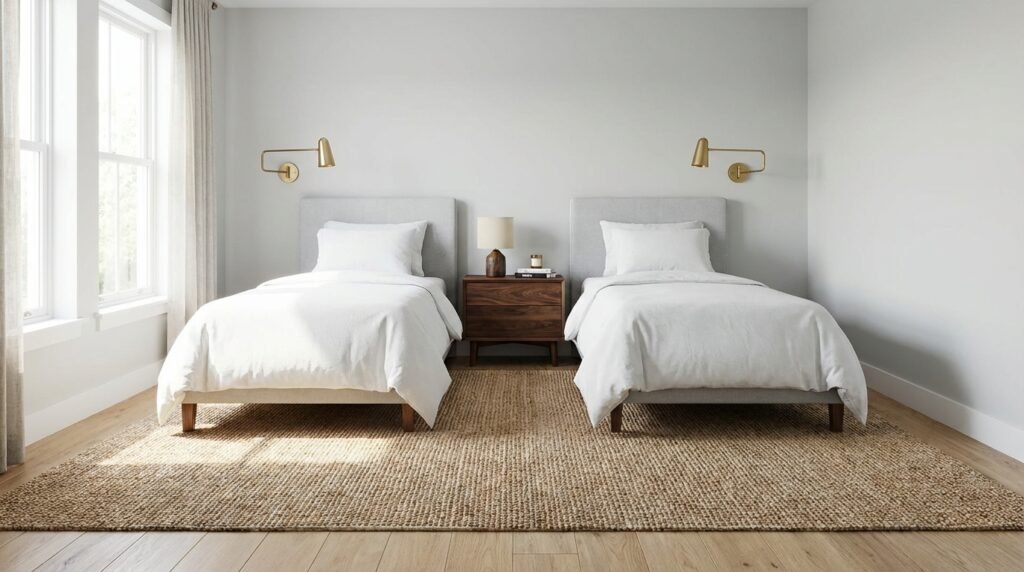
Place two twin beds parallel against one wall with matching headboards and shared nightstand between. This classic layout maximizes floor space and creates hotel-like cohesion.
2. The L-Shaped Corner Arrangement
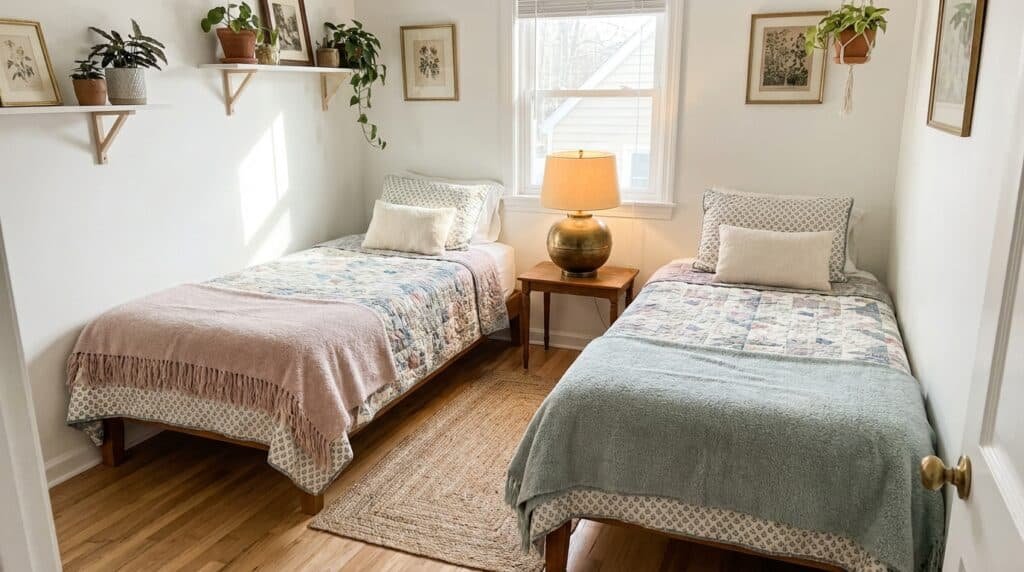
Position beds perpendicular in corner configuration, creating natural conversation nook and improved traffic flow. One bed against each wall opens center space.
3. The Head-to-Head Platform
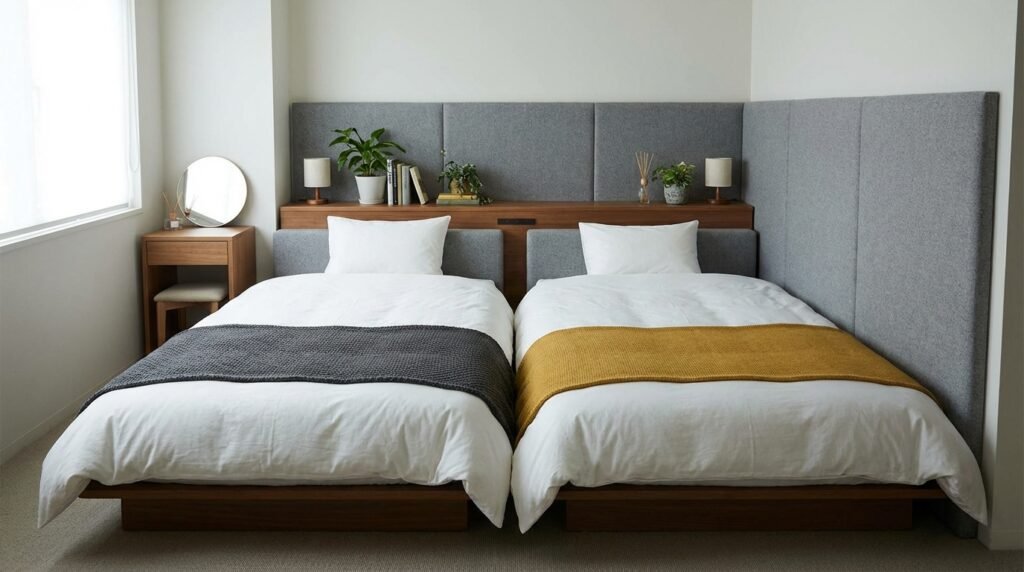
Push two beds together headboard-to-headboard against center wall, creating unified sleeping zone. Shared wide headboard or wall-mounted panel anchors the arrangement.
4. The Foot-to-Foot Facing Layout
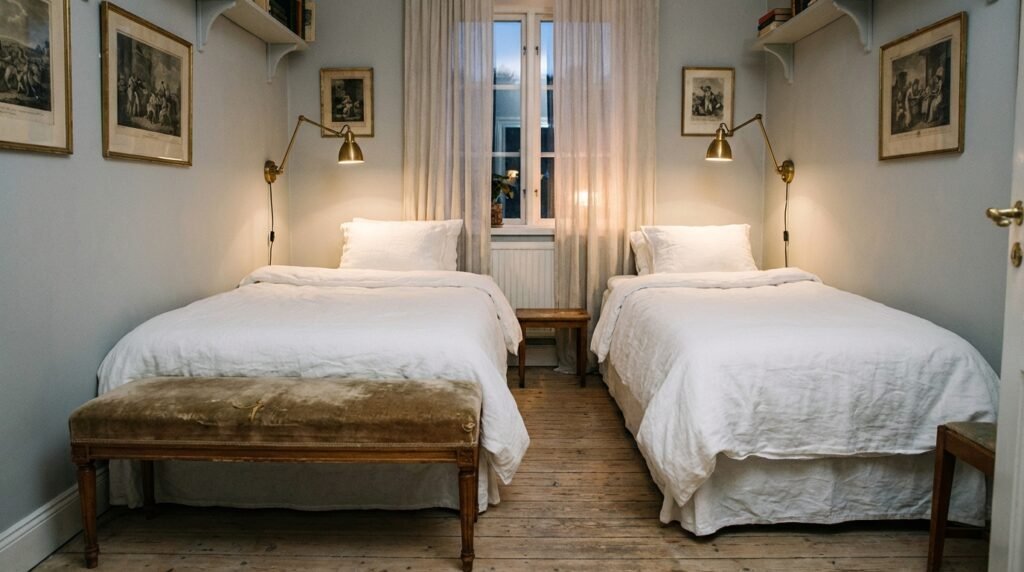
Place beds foot-to-foot facing each other across narrow room, creating intimate conversation setup. Ideal for siblings or guest rooms where interaction is desired.
5. The Built-In Bunk Solution
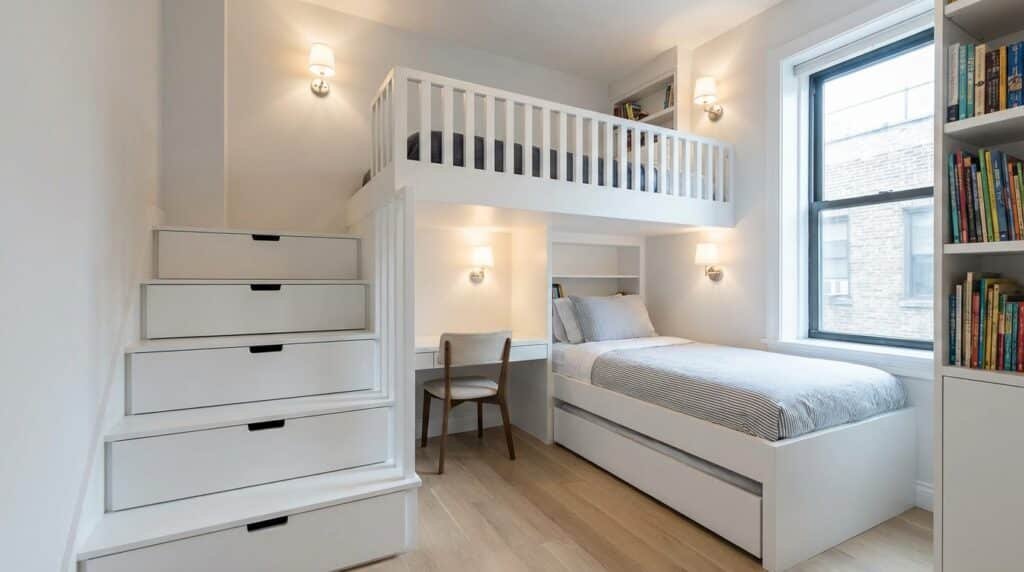
Stack beds vertically with custom built-in bunk system, freeing floor space for desk or play area. Lower bunk can be permanent bed, upper for guests or storage.
6. The Daybed Plus Trundle
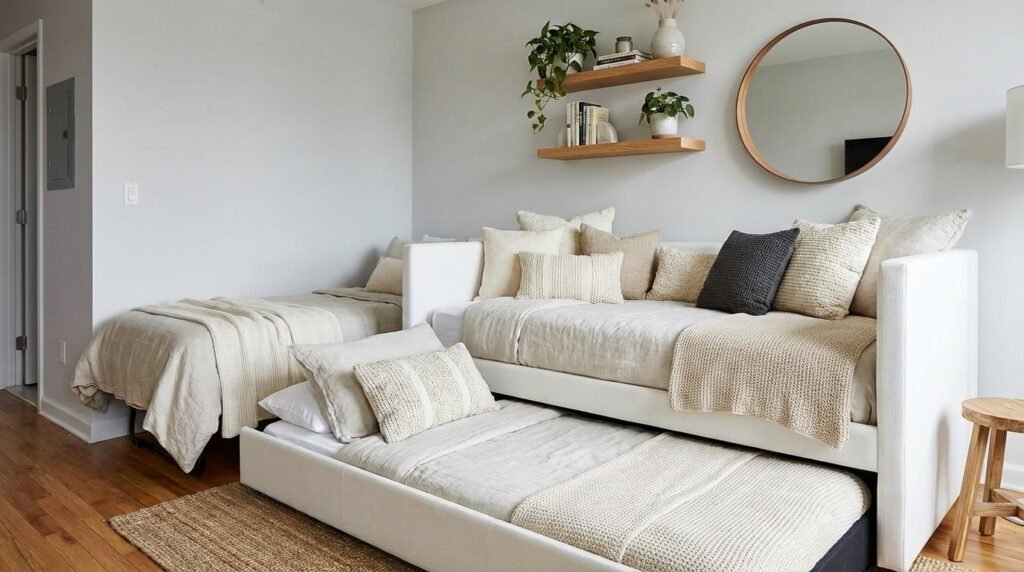
Use single daybed with pull-out trundle beneath, providing two sleeping spots that tuck away. By day, functions as sofa; by night, accommodates two.
7. The Divided Zone Strategy
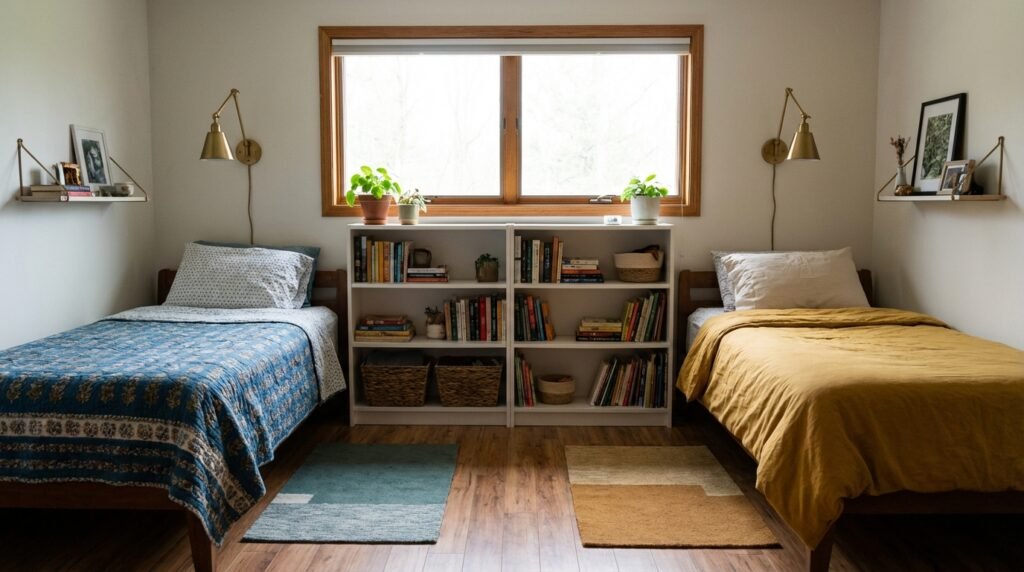
Separate beds with central bookshelf or storage unit, creating visual privacy and individual territory. Each side feels like personal room within shared space.
8. The Loft Plus Lower Setup
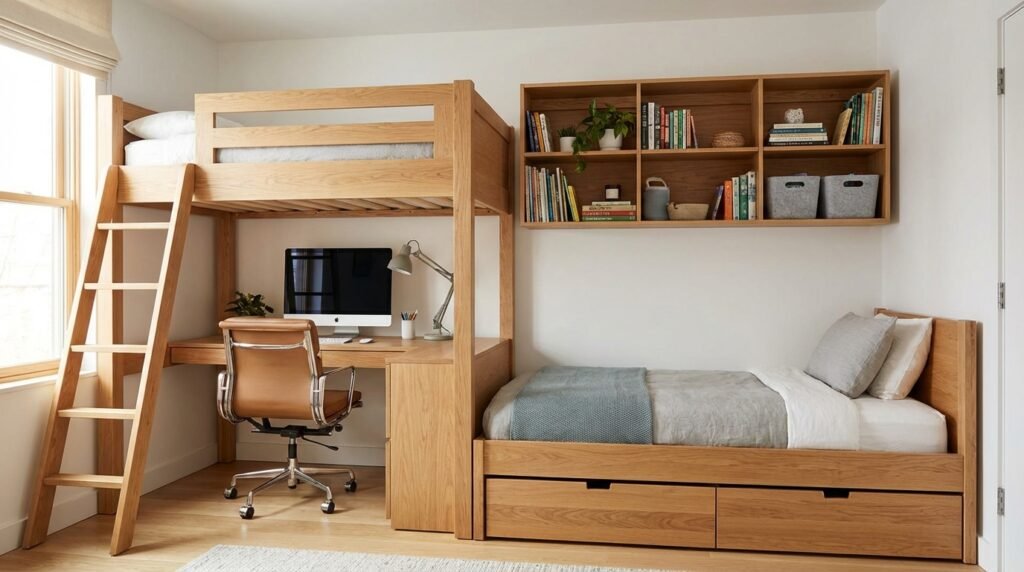
Raise one bed on loft platform, creating study or storage space beneath, while second bed remains at ground level. The vertical layering maximizes functionality.
9. The Murphy Bed Duo
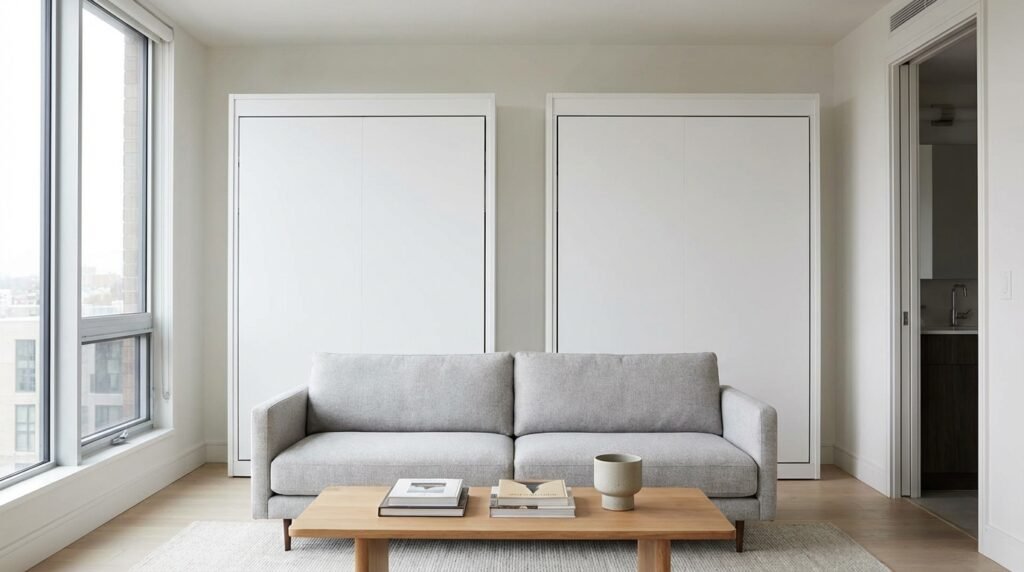
Install two side-by-side murphy beds that fold into wall cabinet, completely disappearing when not in use. Room transforms from bedroom to living space instantly.
10. The Asymmetrical Bunk Plus Single
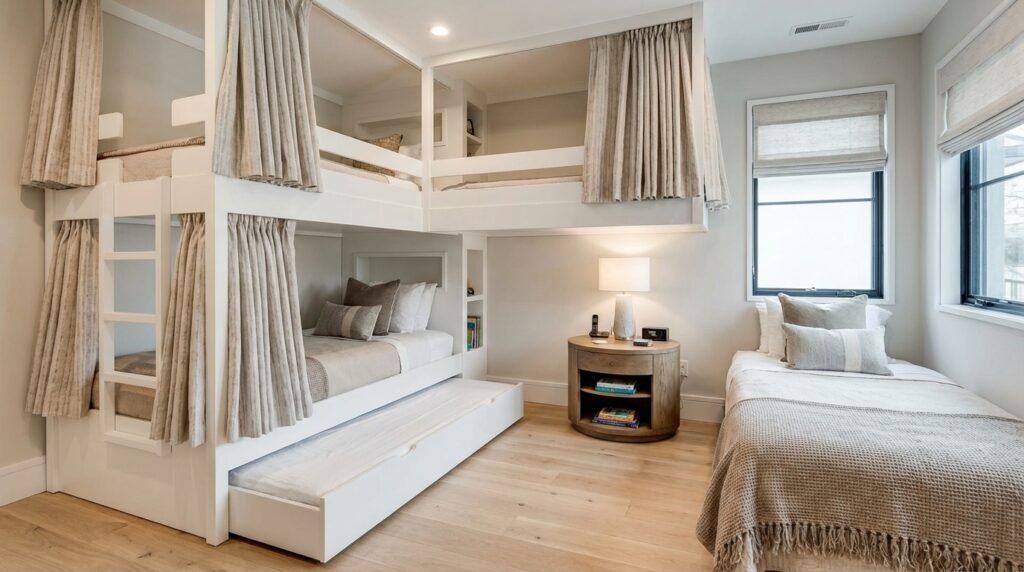
Combine L-shaped bunk bed with additional single bed, accommodating three sleepers or providing guest flexibility. Lower bunk larger for comfort, upper for occasional use.